Wednesday, April 21, 2010

A Little Wild Green Thing Every Day

In early Spring, I like to find some wild green thing each day to provide nourishment and extra flavor to our meals. I brought Wild Leeks (or Ramps) back down with me from a gorgeous stand in the Adirondacks on Sunday and made a big pot of Wild Leek and Potato Soup. Then I found some Wild Leeks here along our favorite walking route and threw the chopped lilies (did you know leeks and all onion-related plants are in the Lily Family?) into an Indian lamb dish with peas. Yesterday I picked some fiddleheads from the abundant  Ostrich Ferns in my wild flower garden and braised them in olive oil for lunch, served with a squeeze of lemon juice and a shaving of Parmesan cheese. Today, it was stray garlic plants and sorrel from the vegetable garden (not exactly wild, but weeds, more or less) with garlic mustard and dandelion leaves in the quiche.

There is something about  going out and picking something usually neglected (and even sometimes despised) as culinary subject-matter that makes me feel connected to all the abundance at my careless feet. 
The asparagus just made its way through the mulch yesterday and the salad greens are starting to make something of themselves (sown by some goddess from seed pods I allowed to mature late last summer). Soon, the garden will generously provide more than we can possibly keep up with (and we are REALLY lazy), but even then the wild berries will drip from the brambles at the edge of the field. We strain to plant and weed and mulch and fertilize, and sometime I wonder what for. In this very green part of the planet, we literally trip over and chop down the bounty provided by Nature. Did I mention that someone told me fiddleheads go for over $6 per pound at the fancy produce stores? Please pardon my amusement....

Thursday, April 15, 2010

Spring Wonders on a Small Scale


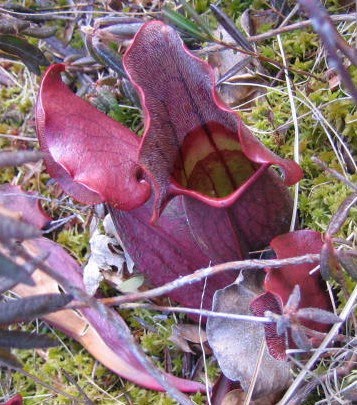
Spring is arriving in the Adirondacks too. It is slower, colder, perhaps more reserved for now. This morning I heard a poem on the radio about a sweep of  hundreds, maybe thousands, of daffodils by water. What a gorgeous spectacle that must be! But here, I’ll take my spring wonders in smaller scales. The beautiful reds of over-wintered pitcher plants and sphagnum moss. The surprising purple on the scales of a balsam fir cone, recently disassembled by a red squirrel for the rich seeds hidden there. And (above) the unfolding leaves of Hobblebush, a wild and native viburnum that has surely one of the most wonderful flowers to be seen in the May woods up here.


Saturday, April 10, 2010

Yoka Wallets

Yoka Wallet Assortment

So, what in the world is a "Yoka Wallet"? First I'll introduce you to Yoka Hart. I met this sunny, friendly, lovely woman at the internet shop in El Valle, Panama as we both struggled with the technology of getting our photos onto our travel blogs. (Click here for Yoka's blog.) A few days later, I stopped on my bicycle at the sweet little apartment she and her equally-lovely husband Matthew were renting for the month on the outskirts of El Valle.

During our Tea Break, Yoka told me she was an artist and showed me a beautiful bag made from one of her weavings. Then she gave me a wallet she had made from one of the wine boxes they bought while in Panama. (Look for the bunch of green grapes with yellow tape trim above.) She said she made the wallet because she needed a wallet to keep her  currencies separate while in Costa Rica. She also gave me a milk carton on which I could practice making my own, along with verbal instructions. I had some trouble finding the electrical tape she used to make hers, so the boxes and bags accumulated during the trip. I even collected a couple of wine boxes from fellow birders, including a nice one from Sue that is on its way to her now as a Red Wine Yoka Wallet. She is going to give it a test run. I hope it holds up and is fun to use! The graphics and text make this a great ReUse Project.

I ended up making several wallets from boxes I brought back (they are SO common down there), including a couple from the Duran coffee bags we bought on our first day in El Valle and one from an apple juice box, the text mostly in Spanish. My favorite, though, is one I made from a box I bought here in our local supermarket. I love mango juice, so it didn't take long to come up with this:


To make a Yoka wallet:
  • Try to find a box that has a rectangular circumference, to avoid making the "pleats" too thick. If the box is fairly lightweight, it doesn't matter so much.
  • Wash the beverage box thoroughly (of course).
  • With an Exacto knife or box cutter, cut off the bottom of the box. I like to use a plastic square on a cutting mat to get it even and - well - square.
  • Cut off the half of the top that holds the spout, leaving the other half for your top flap.
  • Fold the sides of the box inward so that a symmetrical pleat is formed.
  • Fold the length of the box in half, using a bone folder or some some other tool to flatten the fold. (Pliers may be needed to squash the fold enough to make it fold properly.)
  • You may want to use electrical tape on all the cut edges, but you must at least use a length of tape to join the innermost edges together so you end up with two compartments.
  • The extra flap you left when you cut the top of the box will be folded over now to cover the compartments.
  • Glue little pieces of Velcro on the edge of the flap and on the front of the wallet so they meet up. (You might need to put tape on the flap if the glue doesn't adhere to the plastic of the box interior. Seems to stick better to the tape.) I used the very serious E6000 glue.
  • Put a little money inside and let it steep for a day before taking your Yoka Wallet out into the world.
Please try this out and send me any comments about how to improve my directions. Enjoy!

What Happened in Panama?!

Besides filling a journal with bird lists, brief descriptions of daily activities, and a few drawings, I brought home a wealth of ideas for future art work and loads of photos to remind me of what inspired me.

I found a nice landscape-format sketch book with medium weight watercolor paper and covered it with some beautiful paper, including a label with hand-stamped lettering. I finished the inside cover with more of the green paper. Then I covered the outside with about three coats of glossy gell medium to protect it.
On the inside of the back cover, I made a large envelope out of an old calendar page and more paper. (I have to have a safe place to stash brochures, receipts, and other papers to use for the final compilation of the trip in the journal!) Of course, there were a few too many things in there and the next-to-last day of the trip, the end of the envelope blew out. Not bad for a month's worth of collecting though.

Here are a few of the pages, including one of the pages on which I glued the week's dates with spaces for a day's summary. I kept the "date strips" (also cut from an old calendar for a month when the dates and days matched those for March 2010) in the envelope and inserted them at the right place in the journal, not knowing ahead of time how many pages I would use. It turned out to be a great system for us, especially when we joined our bird tour group and we were busy all day and tired when we could finally rest. 

I left lots of space for photos, collaged sections of brochures, interesting receipts, and little doodles. Now I am in the process of printing out the photos on brochure paper (so they are not too thick), using my Microsoft Publisher software so I can adjust each photo to the size I want and to print out full sheets of many photos at once. I then cut them apart and place them in the journal with archival sticky strips or tape.

Eventually, we will have a completed journal that can give us not only lots of little facts we will want later but - more importantly - a way to remember and immerse ourselves in this wonderful, rich, full trip.

Thursday, March 25, 2010

To Lili from Panama

During our month in Panama, I sent only one postcard and it was to Lili.
I am counting on everyone else to read our Panama Field Notes blog.

It has been challenging to do all the painting and drawing I want to do. My trip journal has some of that incorporated in it, but especially now that we are with a birding group there is little time to be in a spot long enough to even doodle. And most of our van and bus rides are bumpy. Partly for all those reasons, I am at the lodge in Gamboa this morning while the rest of the group is out in the woods chasing Ant Pittas and Manakins (some very cool groups of birds). I am going to play with my pencils and paints a bit. Here are a few images from the cloud forest that I want to use in future work. What a gorgeous place this is - over the top much of the time!

Saturday, February 27, 2010

Collage of the Day

I made this post card for Lili using some shipping tape transfers (from the recent class I taught), an old border from some postage stamps (subject: dinosaurs, I think), part of a white pine branch printed from an old book, and some paper scraps. On the back of the card, I wrote her a note telling her how wonderful it is that she can get around now on all fours now like her brothers Milo and Charlie. (I don't think the fact that those two are cats matters to the three of them...)

Because of the continuing snow, the drawing class I planned to teach this morning was canceled. I used that time to get my Panama journal into shape for the trip. I don't exactly how I'm going to use it yet. It may get taken apart once we return home and reassembled in another format. For now, I like making a special cover for it, and it is filled with a nice light-weight watercolor paper that will be perfect for sketching, making bird lists, and collaging artifacts. 

Wednesday, February 24, 2010

Slow in the Snow

This was the view from the bedroom yesterday afternoon. By this morning, the snow-laden branch hung low over the bird feeder, covered by a thick blanket of white. Then the power went off. Luckily, the coffee had just finished brewing and was still hot, so we admired the 10 inch snowfall with eyes wide open. It really was spectaculor. After the Great Ice Storm of December 2008 when we were without power for four days, we knew what to do. So we did slow things doable without electricity, a furnace, and running water - reading, shoveling snow, sitting by the fire, napping, and packaging art work for mailing to Saranac Lake for submission to the 12th Annual Juried Show sponsored by the Adirondack Artists' Guild.

I always find photographing my work before sending it away very challenging, and today was no exception. A bit if serendipity interfered when I tried hanging the work on the front porch though, making the photos of the two little spring flower watercolor sketches into multi-layered images of winter giving forth to sweet growth and color.


The main piece I sent off was the collage of four little collage pieces that started with the botany illustrations. Working with plant images and terminology reminds me so much of my childhood experiences in the woods and fields where I grew up. One Spring while exploring the fields and woods around my grandmother's farm near Bath, NY I found a whole hillside covered with white trilliums. I was completely enthralled. Another Spring a few years later, I discovered intriguing sprouts pushing up through the leaf litter and dug some up so I could watch every bit of the progress made by the emerging plant. I planted the shoots (and their roots) in pots in my bedroom. Then I found branches with swelling buds and stuck them in jars of water on my shelves and desk. Then I watched. Again, I was enthralled and awestruck as the shoots sent up leaves and then jacks in their pulpits. The buds swelled to bursting, and maple catkins and oak leaves and black cherry flowers unfurled, shedding pollen and tiny larvae and little winged creatures across my homework pages and text books. I was in love with it all. And still am.